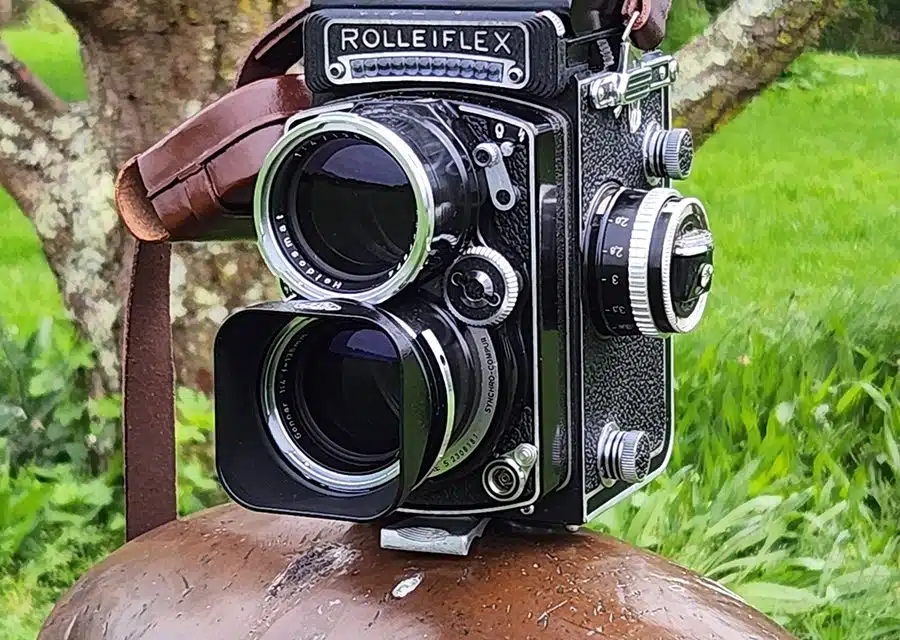
Franke & Heidecke’s Tele-Rolleiflex;
The peak of 1950’s engineering, in 1960… Franke & Heidecke’s Tele-Rolleiflex is something special.
Pre amble
Throughout the first half of the 20th century, Rolleiflex enjoyed a dominant position in the market for high-quality, medium format cameras. Gradual improvements and steady sales had placed them at the forefront of the race to become one of the biggest players in European camera manufacturing.
These years of refinement led to the creation of one of the most—if not the most—iconic cameras of all time: the Rolleiflex TLR.
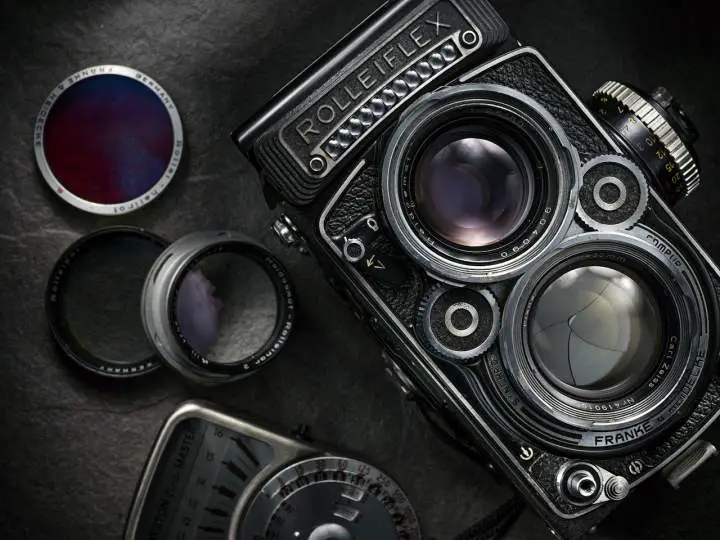
However, decades spent perfecting the Rollei platform had made the company inflexible. Drastic change was not something that came easily.
In 1956, that resistance to change would come back to bite them.
It was a year of shifting tides for Franke & Heidecke. In the East, a challenger emerged: the Mamiya C series—a high-quality, medium format, twin-lens reflex camera that offered something unique in its class: native interchangeable lenses.
The Mamiya C3 was exactly what photojournalists around the world had been asking of Rollei for years—a professional-grade reflex camera with a versatile range of lenses, all in an affordable package. For some, this was the last straw. Many jumped ship to Mamiya and never looked back.
In response to this dramatic market shift, Franke & Heidecke didn’t just drop the ball—they kicked it onto the grumpy neighbor’s roof.
Stay the course
At first, it was believed that this fad of changing lenses would blow over- any real photographer worth their salt knows that the Rolleiflex is the way to go!
No need to worry, carry on.
Inevitably however, The C series enjoyed strong sales, with a worrying and ever growing enthusiastic user base.
In a delayed response, F&H got to work, creating their own competitor. Feedback from photojournalists was promising- But to the amazement to many, this project was soon cancelled. It was deemed out of reach by their engineers to form a camera to the “Rollei quality” using this system.
Creating an entirely different lens/body combination for each focal length however, would be far easier.
Thus, in 1959 the Tele-Rolleiflex was born.

Unfortunately for the Rolleiflex by this time, the world had moved on without it. The lethargic reaction to Mamiya’s innovation, and the emergence of a little known camera called the Hasselblad, had left its creators in the dust, behind the curve they once dominated.
But what was birthed from this desperation was both the ugly duckling, and true evolution of Rollei.
In use
I will start by saying this- The tele isn’t for everyone. The short lived run and niche popularity during its life was in many ways well earned.
It is heavy. It is ungainly. The MINIMUM focus distance is two meters. The widest it will go is F4- too slow for some.
But bloody hell, I love it.
Having it at my disposal helped solidify a lingering thought about using medium format.
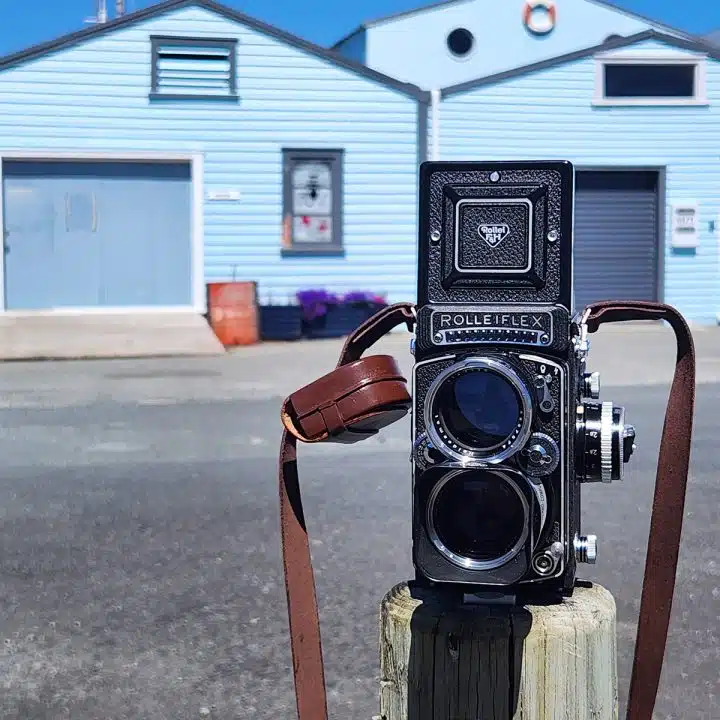
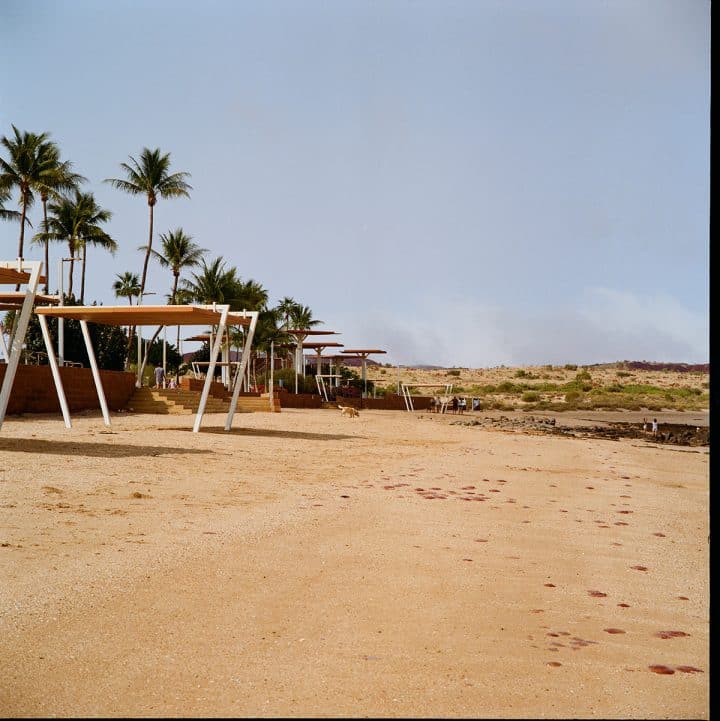
The single niggle I have with my well-worn 3.5F is the “wide” perspective I have to work with in landscape photography. Stark, flat landscapes in my part of the world aren’t conducive to wide lenses, so the Tele fits in well.
My copy looks like many Tele models do, being near immaculate, seemingly unused. A sad reality for this camera, but a boon for those of us who are on the hunt for a good copy.
Ergonomics are near identical to its conventional brethren, with the usual shutter/aperture thumb wheels, release, and focus in the usual places.
I believe my particular Tele is the Model II, with the uncoupled meter and E.V lock functionality.
Using the Tele is an interesting experience compared to my 3.5F.

The trade-off made for the increased focal length compression comes home to roost in the form of operating speed, creating a platform well suited for portraits and open vistas, but not the fast moving pace of street photography.
A stationary position is a must. A slow, methodical shooting style will reward you with images that make the effort well worth it.

One aspect of the Tele that I find amusing is the inclusion of the open sports finder in the hood. Also in the sports finder, is the reflex focusing mirror.
This is another of the idiosyncrasies of the Tele- good luck using the sports finder full stop for anything closer than a kilometre (Or 15,000 Cheeseburgers), as it is vastly ill-suited for telephoto lenses.
I would like to try a parallax error test between the sports finder and groundglass, for no other reason than to sate my curiosity of this insane inclusion.
Eulogy
So went the life of the Tele Rollei- a slow gestation, an early demise, and a gradual fade into the white noise of progress leading it to fall into obscurity, passed up for the more conventional and flexible offerings available abroad.
While the 2.8 might be the fastest, the Wide the rarest, the Magic II the strangest, and the battered 3.5F my favourite, The Tele Rolleiflex really sets itself apart from the pack as something truly different.
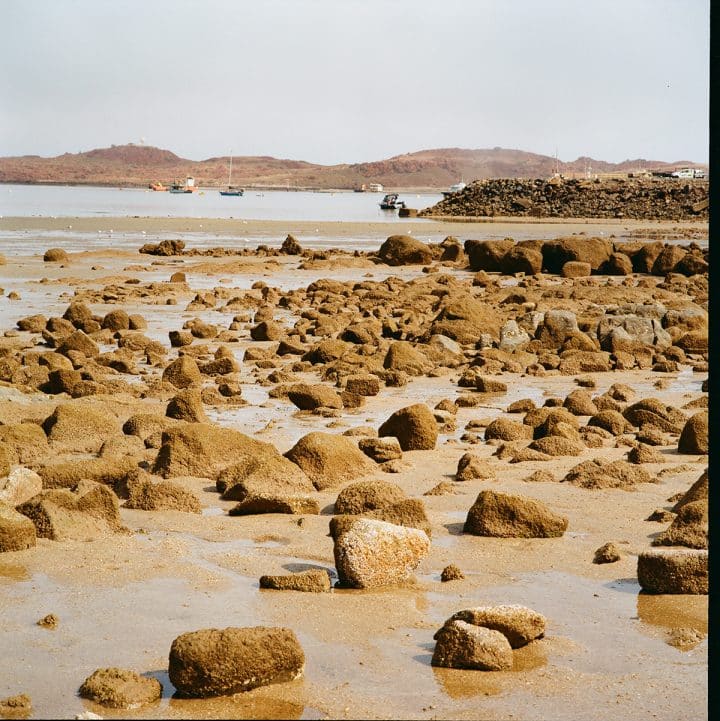
Quickly it has become a worthy addition to my landscape work, and could very well be on the way to being my go-to travel camera for medium format.
The last production batches of the Tele came into the world right towards the end of Rollei, making it one of the last of a dying breed- The final gasp of the Franke & Heidecke’s TLR platform that transformed photography as we know it.
Just six years after the Tele’s production rolled to a halt, on the third of July 1981, Rollei filed for bankruptcy. Years of being slow to react to market changes, mismanagement, and poor sales had finally caught up with them. They were soon carved up between multiple corporations, making for a sad end to a once proud figurehead of innovation.
The future had arrived, and it was not kind to the venerable Rolleiflex.
If you ever have the chance to use one of these rare beauties, jump at it. You’ll see what I mean the moment you pick it up- It isn’t a camera you forget.
JG
Thanks to Jayden for sharing this unusual Rolleiflex camera with us. Do you have a camera story you want to share with us? Drop us a line and we can get it on the site.
JCH