
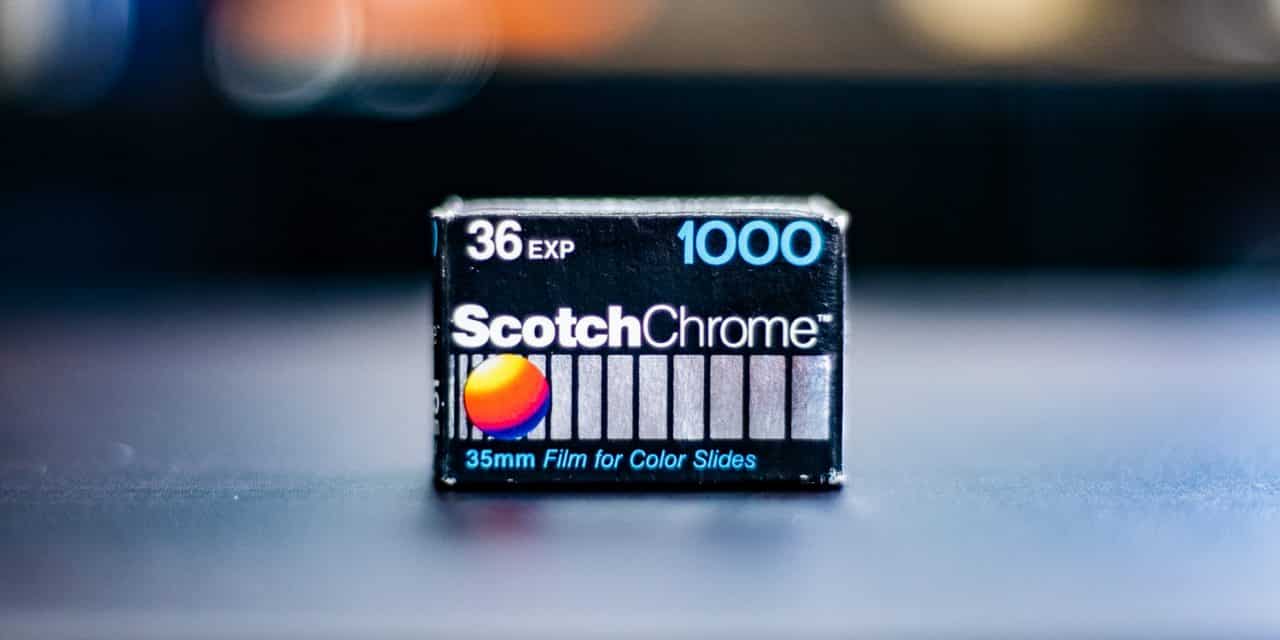
Film Review: Scotch Chrome 1000
3M’s Scotch brand is virtually synonymous with tape so I was a tad surprised to find a little box tucked away in the JCH freezer labeled Scotch Chrome 1000. We’ve recently moved office so while packing up our knick knacks, I stumbled upon this curious emulsion for the first time. So many questions swirled around the noodle. ISO 1000 slides? Who used this $h!t? Expired since 1995? How should you shoot it now?
A dive into this peculiar film’s background unveils quite a tumultuous and pivotal time for photographic film. If Scotch Chrome 1000 piques your curiosity as much as it did mine, scroll on down and learn yourself something about an interesting chapter of film photography history.
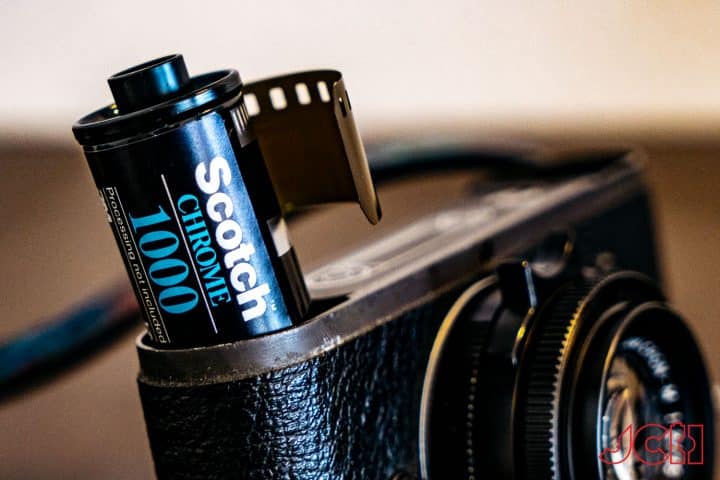
Scotch made film?
3M, the American super company from Minnesota, is arguably most well known for its sub-brand Scotch. As in Scotch tape. Like Xerox for copiers or Google for search, the brand became synonymous with the product and manifested itself into a household name. Based on that, 3M decided to use the Scotch name for film production after acquiring a little film production company called Ferrania.
3M and Ferrania
Ferrania was/is again an Italian filmmaker based in Ferrania (Liguria), Italy founded in 1923. They were producers of photographic film, papers, and photographic equipment, even some cameras. By the 1960s, Ferrania had become a highly respected company and a major presence in Europe with production of cinema products and photographic film for use by consumers and medical professionals alike.
Ferrania’s success caught the attentive eye of mega company 3M and in 1964 they acquired Ferrania S.p.A. in a stock purchase valued at $55 million and renamed the company to Ferrania 3M. It was 3M’s largest acquisition in its 62 year history.
OG Ferrania produced B&W cine and still films such as the legendary P30 (check our review of it here) but as Ferrania 3M, it pivoted to OEM. They became a significant producer of so called ‘private label’ consumer color films for both retailers and traditional B&W film producers needing a color film to repackage under their own brand. In other words, they made their name making a name for other names ;) Examples are the Scotch brand , Fortecolor film (Konica), Polaroid, Lomography (CN100), the Boots UK pharmacy chain color films from 1973-2003 and even AgfaPhoto color negative and slide films from 2005-2009. At this point, any trace of Ferrania roots could only be found in the humble “Made in Italy” imprint.
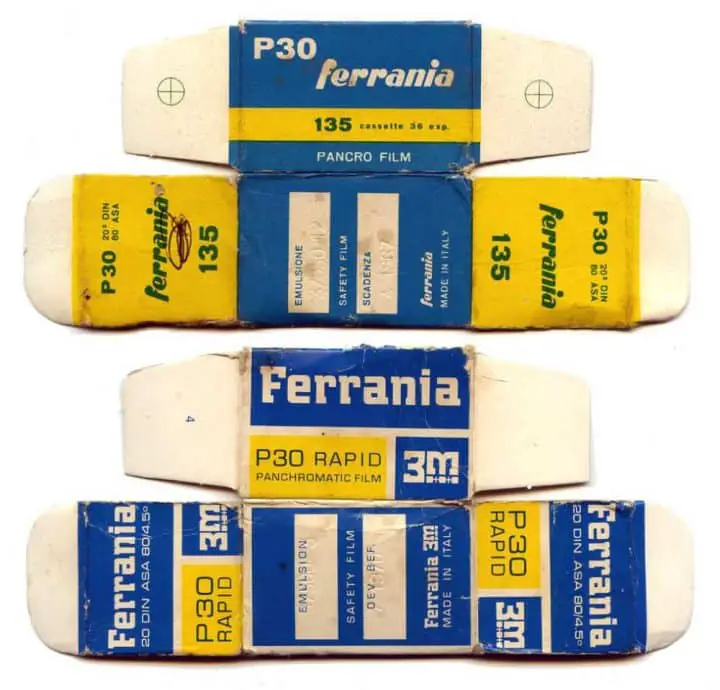
Packaging at the beginning of the 3M Era (via Emulsive)
End of an era
The final blow to the Ferrania brand of old came on November 14, 1995, when 3M announced the unprecedented restructuring. The head honchos decided to spin off the data storage and imaging businesses into a new company (Imation) and discontinue its audio and videotape businesses. Film packaging changed once again and placed even more distance between Ferrania and the consumer.
Imation’s relationship with Ferrania was short-lived as it only lasted until 1999 when the Italian operations were sold to an investment company. While this allowed for the Ferrania brand to be resurrected, it was already too late. A double pronged attack proved overwhelming. Digital photography had began its Thanos onslaught on film and they lacked the sufficient resources and marketing prowess to take on the big four of Kodak, Fuji, Agfa and Ilford.
However, reflecting on the positives, the Ferrania 3M years are remembered by those who worked there as being full of great professional opportunities. 3M fast-tracked the L.R.F. building to allow for extensive research and development, and provided high-quality training and other programs for their new Italian crew as well as upgrading the machinery and processes of the original factory.
As a result, they produced the world’s fastest daylight-balanced color transparency film in 1983, Scotch Chrome 1000 – a milestone that was never surpassed.
Scotch Chrome 1000 in professional use
Advertisement photographer extraordinaire Jody Dole was a prominent proponent of Scotch Chrome 1000. “I was using grainy film, the cheapest I could find,” Dole reflects. The unique graininess, and how he photographed a vodka bottle and glass, plus “total dumb luck,” landed him a $90 million Smirnoff advertising account. “That really launched my career,” Dole said.
Below are some samples from Dole and other photographers as well as some words on their choice of going with Scotch Chrome 1000 taken from the pages of a 90’s Pop Photo magazine. According to Dole, Scotch Chrome 1000 is the “only slide film that you can push without gaining contrast or undesirable color shifts.”
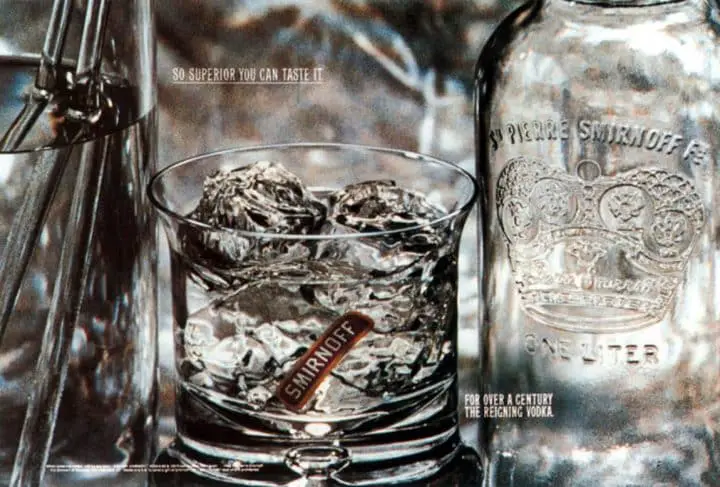
Iconic Smirnoff ads shot by Jody Dole on Scotch Chrome 1000
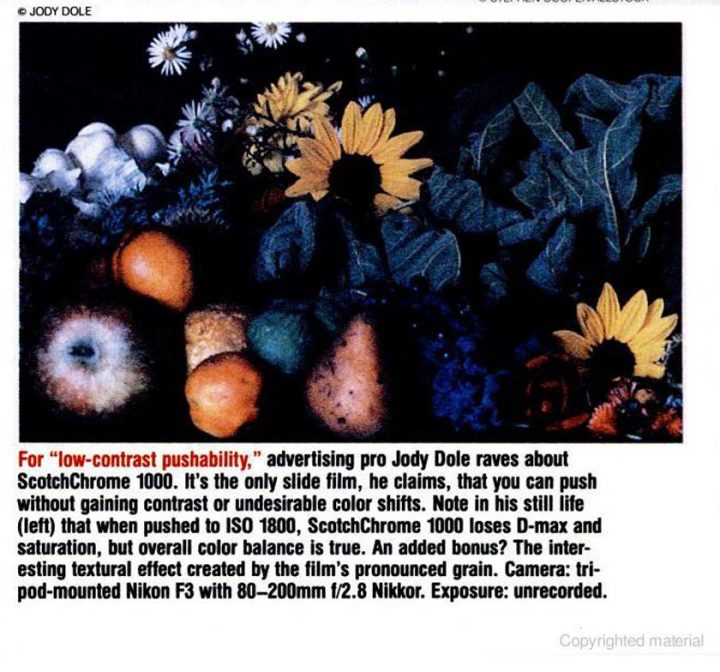
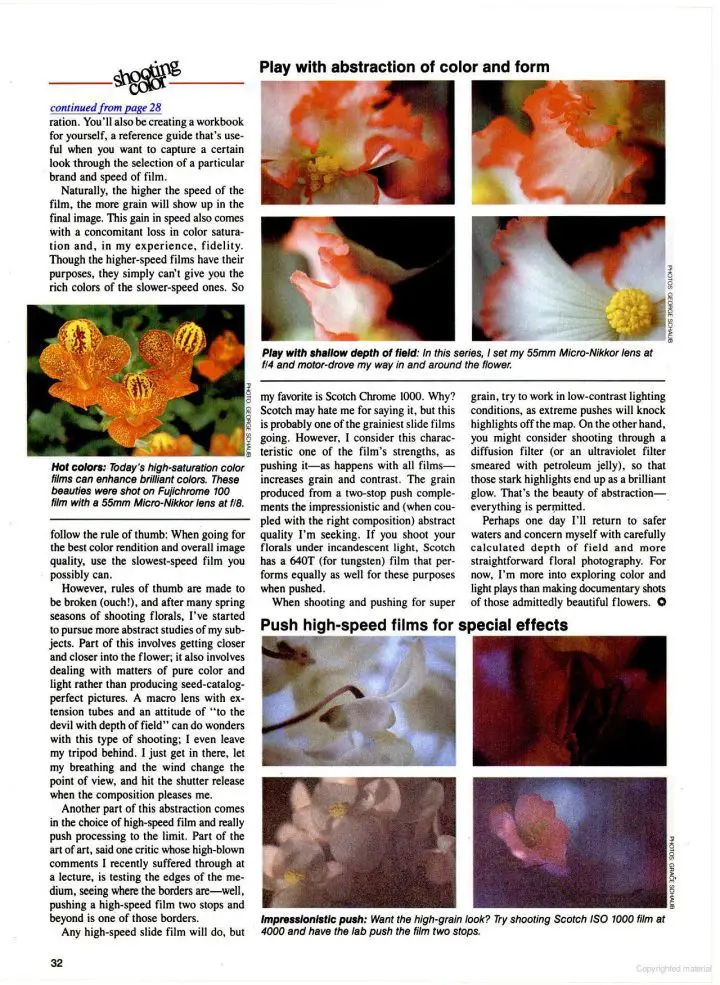
Excerpt from 90’s Pop Photo Magazine
A closer look
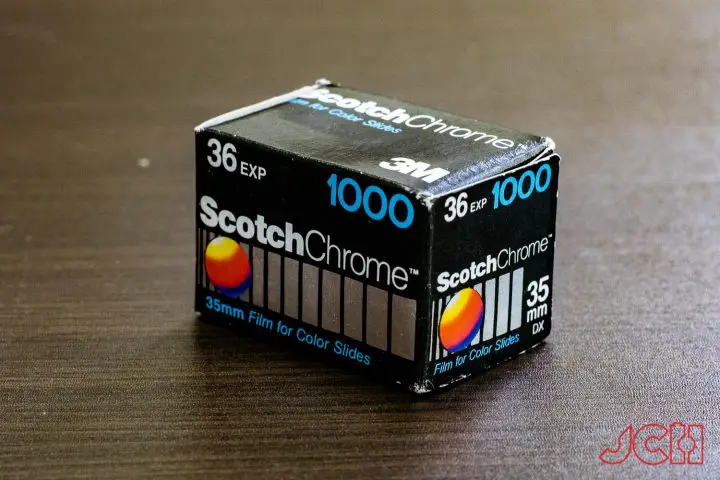
I love the packaging design. The black box with the color choices all work for me and that blocky 90’s look is cool. I’m also a sucker for metallic foil labeling on boxes.
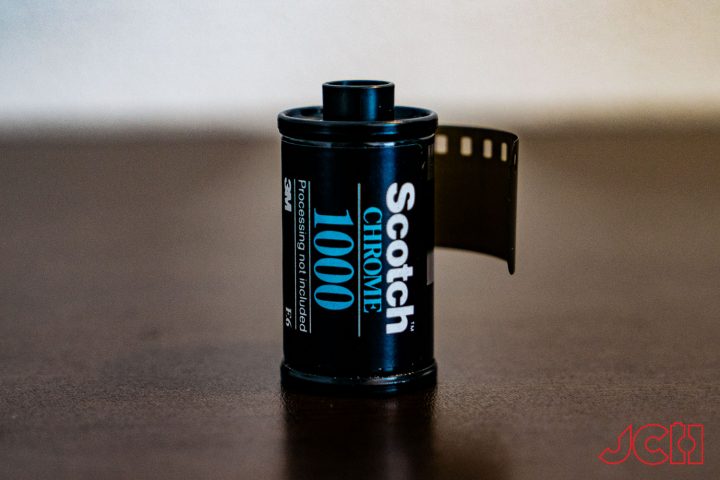
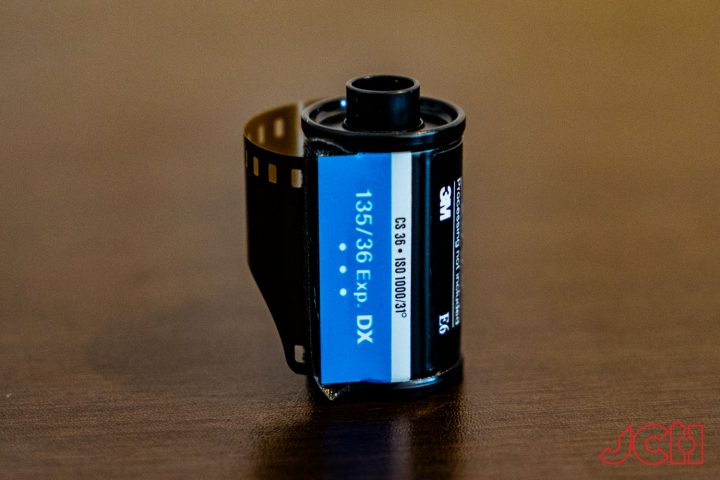
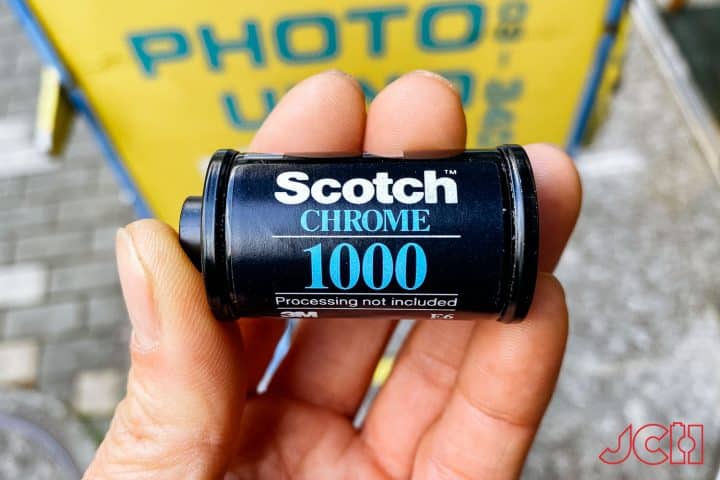
The canister too is simple but cool and complements the outside box perfectly. Color is understatedly used for vital information and text is spaced out efficiently and easy to read.
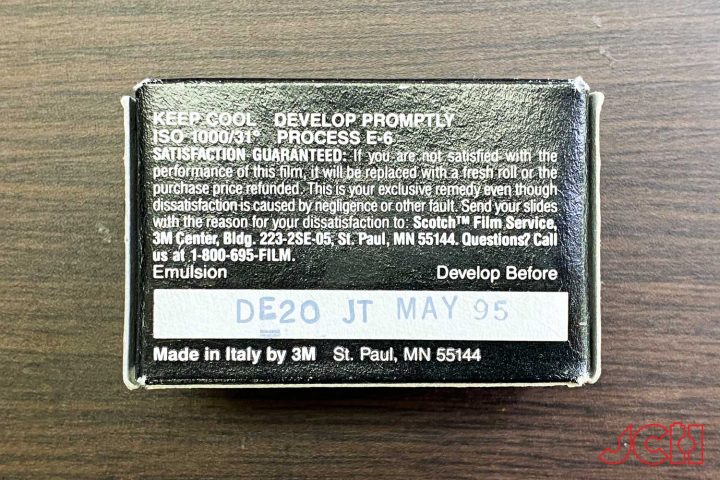
As this roll has been expired for over 15 years, I knew there was probably no way I could shoot it like Dole pushed or even at box speed. While it is known to have been in a freezer for the last 5 years while we had it, we have no idea of how it was kept before that. The rule of thumb for shooting expired film is adjusting a stop for every decade, but I decided to just go with a gut feeling and try giving it a go at 640.
Scotch Chrome 1000 Sample Images
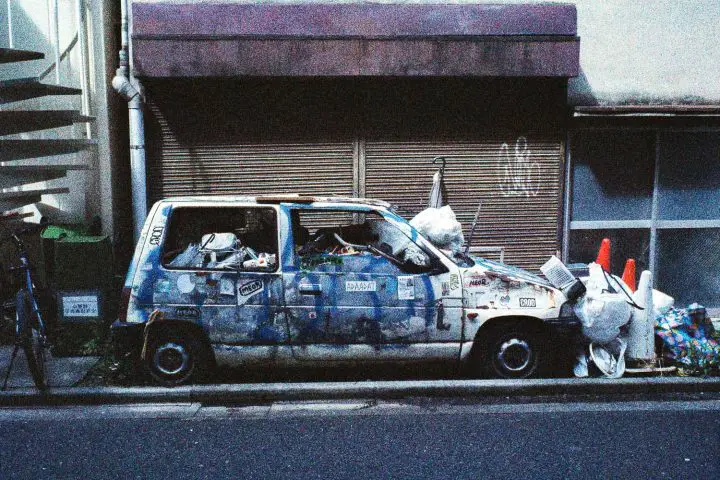
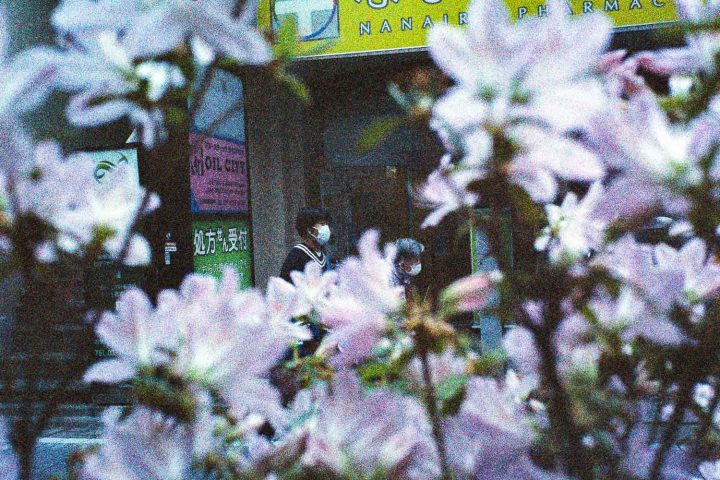
The following images were shot at ISO640 with a Leica M6 and 35mm Summicron v4. Lab developed at Photo Ueno and scanned on a Plustek Opticfilm 8200i.
















Thoughts
So yeah, the film is indeed very grainy. Shooting it at ISO 640 even displays the pronounced grain structure. From these results, its quite hard to imagine how they used to push this to 4000.
The color temperature is on the cool despite being a daylight film. This can also be attributed to simple entropy or unknown exposure to temperature changes over the years. Nevertheless you do get a glimpse of what the film was capable of in its glory days, especially when the exposure is spot in good light. But like the ex-POTUS, tolerant it is not. Shadows are easily muddled and performance in flat lighting is underwhelming at best.
The pronounced grain is unique and the somewhat dated color tone can be applied to creative uses but for most I imagine Scotch Chrome 1000 is just not worth a bother today. There really is no need for it to be a slide film. I do wish I could have shot it back in the day though to see how it truly performs. That being said, it was an an educational journey and and interesting taste test of some history.
What are your experiences with Scotch Chrome films? Would you shoot it if it was around today? Let us know your thoughts below.
MN




While I still dream of the return of Polapan, I would shoot it for sure in my good old F2, on the backsreets of Berlin. This looks like perfect material for an album cover. LP sized, of course.
I’d definitely give 1000 ISO slide film a go, but think new slide films would struggle to make an impact at £20 a throw. There is a gap in the market for a fast slide film, but it would have to be more affordable to encourage repeat use.
Provia 400X was pushable in the same way but with tighter grain and better colour rendition. Miss that film every day.
If Ferrania has the will to finally get their slide film out, an improved high speed version should be next in line. And they’ll have to beat Fuji and Kodak on pricing for it to stick around.
That was my donation to Bellamy several years ago. I bought it from my mentor Peter Balazsy who kept it frozen since new. If you want to see what the film is really capable of google the 1972 Pirelli Calendar which was shot on pushed Scotch Chrome 1000.
Cool, thanks for the rec!
I shot a expired 35mm roll of Scotch 800-3200 slide film at 400 and while is it grainy the positives look great and are easy to scan!
https://www.flickr.com/photos/sf_webcoast/albums/72157679307320280
Nice. When I was a kid growing up in the 70s/80s in the midwestern US, most store-brand films were white-labeled Scotch films. Let’s just say it was worth it to spend the extra dollar or two on Kodak film. That’s 100% of my experience with Scotch film, so it’s nice to see this Scotch Chrome. It’s apparent from your results that when it was fresh it was probably pretty nice.
I love it. Grainy film shows itself off best when there are large areas of uniform texture. Sky. Armco. Wonderful. If I shot colour I’d use it. But I don’t.
I loved shooting this Scotch 1000. We used to have a discount drug store in town called Pharmhouse and they sold Konica, Agfa and Scotch film. Any 24 exposure roll was $1.84 and 36 exposure was $2.46 The film was not expired. I had been used to shooting Kodachrome 25 and 64 and trying these new brands especially the Scotch Chrome was a great experience. I had never been a fan of prominent grain but grainy slide film was a novelty I couldn’t resist. I shot a roll of Scotch Chrome 1000 at a wedding. I loved the images, thought the bride and family did not.
great, one more time ;-)
I wanted to buy, but I haven’t.
The results are great, it is like painting.
I will buy to avoid film simulations which are bad. A true color grainy negative ;-)
This reminds me of another great “grainy” film Anscochrome 500. I believe at one time it could be bought in 120 rolls, and in that format, it looked fabulous! I knew fashion people that used it all the time. Back when film was ubiquitous, every brand or format or speed had enough of a market to keep it running; not so much now. There isn’t even professional E-6 processing within a 100 miles of me!
Back in the days these were the cheap options I would choose when I was not opting for the Sensia rolls.
They were really cheap, I remember they were selling everywhere.
They looked cheap but I have realized how wrong I was. They had a color cast and mood that nowadays a lot of people try to get with filters, but it can never be the same.
I have hundreds of slides from those days, I wish it could be cheap and easily available like it was. I would choose them over Sensia today, no doubts.
Huh would love to get my hands on some Sensia and do a comparison, thanks
Back in the late 60s, I worked in the camera department of a Kmart store in Michigan (Kmart was a discount chain, akin to Walmart today). We sold “Focal” brand film, which was Kmart’s camera house brand. It was 3M Ferrania, house-labeled and “Made In Italy.” I shot plenty of the Scotch “chromes” and found them quite comparable to Ektachrome, and superior in many respects to the GAF color slide film also sold during that era (GAF = General Aniline & Film, a US manufacturer). My favorite, though, was Agfachrome. Hard to beat for vibrant color.
Hi! I think, on first inspection, that you overexposed the film. Maybe you should have stuck to ISO1000? From my experience exposing decades expired Ektachrome 64 and 400, mainly for caffenol development but the occasional c-41 process, the graininess increases with overexposure. That’s my thoughts on the subject.
Interesting investigation into Scotch Chrome 1000, thank you for that!
Thanks for the comment, yeah i think you may be right. I’ll try the next one at 1000 and see how it goes!
I remember this great film very well. I put a roll through a Leica iiic and took some snaps on the beach. One group shot had an old world feel about it so I blew it up to 12 x 16 inches on Cibachrome (processed in an unventaled darkroom….how my lungs survived I’ll never know) with a light soft filter under the lens.
The result was great, very reminiscent of the Lummier’s Autochrome pictures of the early 20th century.
Sears also packaged Ferrania film as their house brand in the early ’70s. With my employee discount the film was dirt cheap. I think the slide film was ASA 50 or 64. But it wasn’t good film for shooting trains, then as now the main subject I photograph. Sadly, my experimenting with 1970s slide film didn’t end with Searschrome. I also tried Agfachrome, Anscochrome, Dynachrome, Ektachrome and Fujichrome. All garbage compared to Kodachrome.
My Punk-era rogue Seattle B&W lab, Superposter, couldn’t get a contract with Kodak for anything, because we didn’t use their processors or paper. We turned to the local 3M supplier, and they were happy to have us sell their color films! I thought both the ISO 100 transparency and 100-200 color negative films were very good; the 400 transparency tended pinkish in the grays; but the 640-T and 1000-D films were utterly astounding! I took pictures of a Wiccan ritual with a 1.8 lens by candlelight!
Then Kodak got its ass in gear and introduced EK 320, pushable to who knows where.
It’s my contention that films like 3M, Agfa and Konica would have been proclaimed great, if Kodak and Fuji hadn’t stood in their way like monoliths. Interestingly, “honest” color, like Kodak produced, was not as appealing to my clients as the slightly distorted colors of Fuji. The reds were redder, the blues were bluer… you know the story. Now, Kodak is packing pasta sauce, and Fuji has worldwide sales of its digital cameras. Kind of ironic, when you consider Kodak invented digital photography in 1976… and put it on a shelf. Great going, guys!
I briefly worked as an assistant to legendary (you bet) fashion photographer Deborah Turbeville in 1984/5.
Her stock film was the 3M 400 iso transparency. The results were magic.
Inspired, I used the same film. The colours were like a renaissance oil painting, rich reds, azure blues and warm browns.
It printed beautifully. I sorely miss this wonderful film