

Jesse’s Book Review – I love Boras by Lars Tunbjörk
There was a pivotal shift in Swedish society when Prime Minister Olof Palme was assassinated in front of his home in February 1986. The goals of the Swedish Welfare State in creating a paradise of equality on earth where everyone has the same possibilities, rights, and obligations became dismantled that night in 86’.
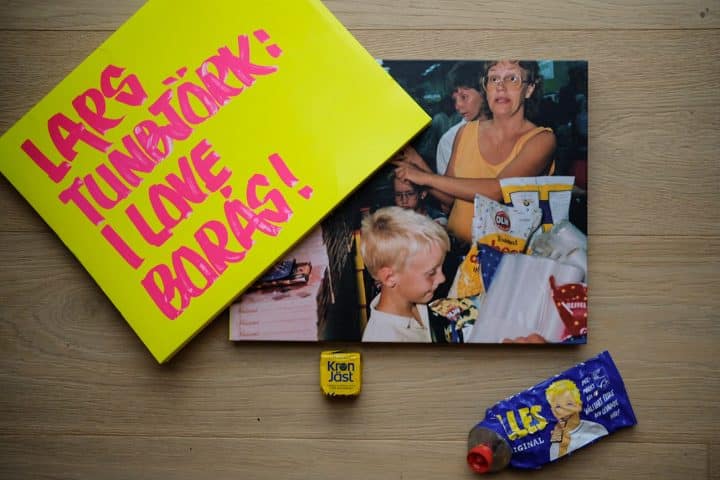
No one captured this shift more than Lars Tunbjörk with his “medium format color daylight flash snapshot absurdity” depicting satirical empathetic images of a people who have made consumption their main goal in life. Here is one of his books depicting just this in I LOVE BORÅS.
The “medium format color daylight flash snapshot absurdity” adjective filled description of Tunbjörk could easily be ascribed to another 80s photographer just south of Sweden in Martin Parr. With the progression of color photography the choice of color seemed relevant to the times and their depictions reflect similar political landscapes of the 80s that could really only be seen as a natural reaction to the times. And in getting comparisons out of the way in terms of humor fellow countryman, Roy Anderson, captured the same sentiment in cinema.
Aesthetically, with the latter, desaturation and tighter compositions were a point of difference, but they share in common their portrayal of existential impotence that again to me should be viewed as a natural reaction to the times.
Tunbjörk is just good! In the canon of Swedish photography I could only place Christer Strömholm higher, especially in consideration of influence with the Fotoskolan academy he co-founded in 1962 that would really set in place Tunbjörk’s generation of photographers.
And again going back to the times, Strömholm was the classic black and white photographer of the post war generation, while Tunbjörk was the new generation that utilized the improvements in color photography from the 70s on. But beyond that both were distinctively Swedish in their approach to their subject.
Composition
With 161 images, I LOVE BORÅS was aptly named after his hometown and shot between 1988-1995. The book however wasn’t published until 2006.
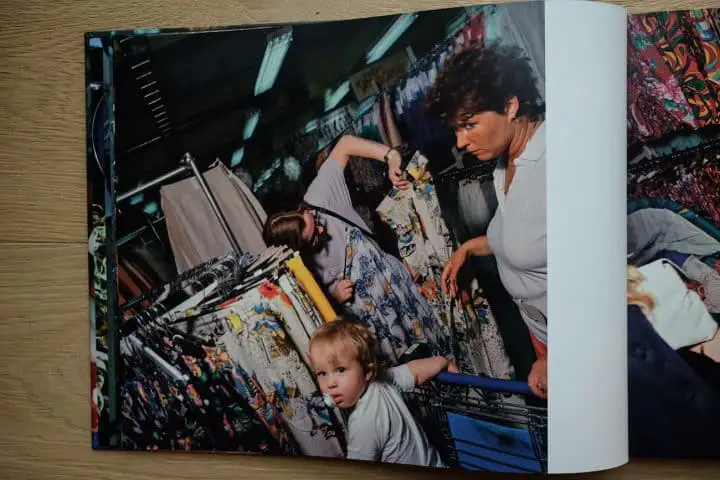
It mostly consists of ordinary Swedish life, i.e supermarkets, small town streets, gas stations, landscapes, parties, etc. Shot during the economic recession of the early 1990s, the worst the country has faced since the 1930s and with that there is this dark almost manic view he takes that really could be generalized as westernization as a whole.
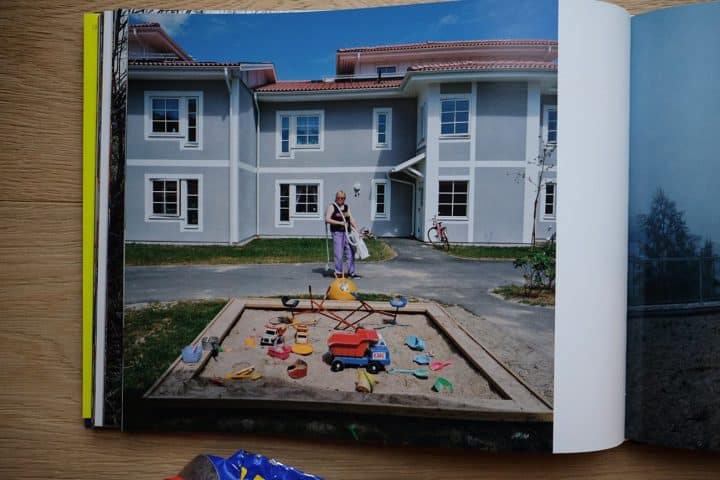
But photographically, this is all expressed. Compositions are usually off-centered, if not rushed. The colors really pop out of course, but the compositions!
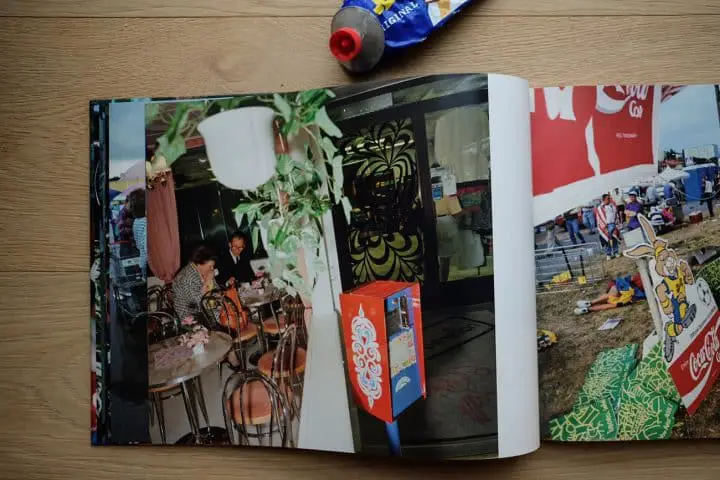
Color is incorporated into each photo as a Godard film with primary colors featured in almost every shot suggesting a plasticity to it all. Because often his compositions are strangely over composed when not loose in a snapshot style…this notion of everyday surrealism comes about. Triangles, squares, circles all hint to this uniformity of a national impotence stemming from 86’.
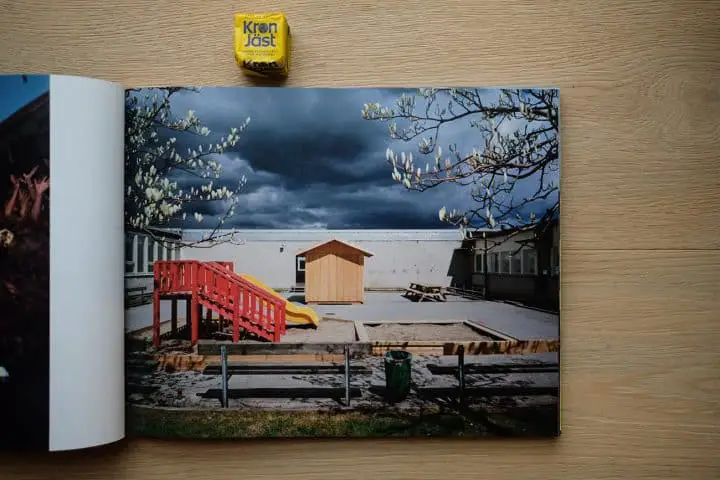
One thing I could point out the editing could of been tighter. Most of the photos are just as they are shot; chaotically put together. For such random everyday photos I expected editing more akin to an Egglesteon or Kawauchi. I kept wanting to see more random juxtapositions that work together, but aside from perhaps a handful occurrences out of the 80 some odd pairs of photos…there really weren’t any.
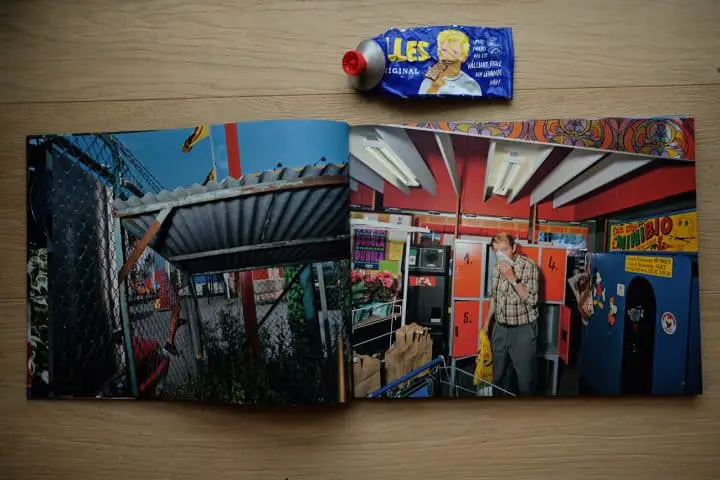
Which I guess harps back to the point I always make in past reviews about Japanese photo books in that most Japanese photographers shoot with a book in mind so there is an atmosphere and flow to the images. Western photographers almost seemingly take great photos and just give contact sheets to an editor for a book layout who in turn works with a set amount a pages in mind and narrows the best work accordingly.
With that said this is a Steidl book…the book cover and presentation are suitable…just felt there could be more play with the editing to suit a book layout.
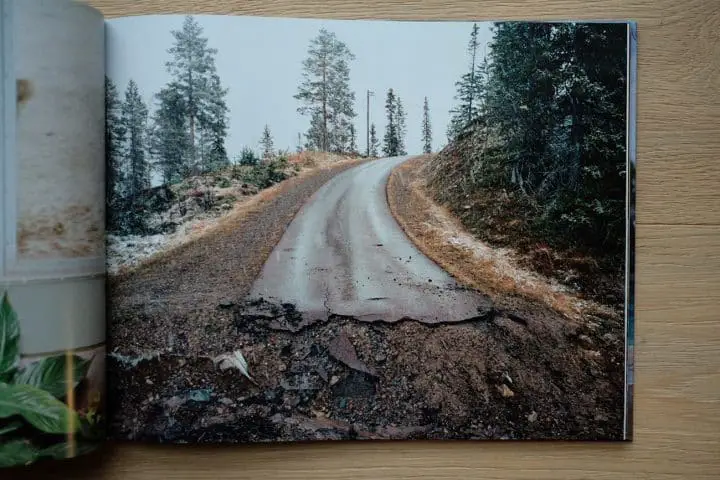
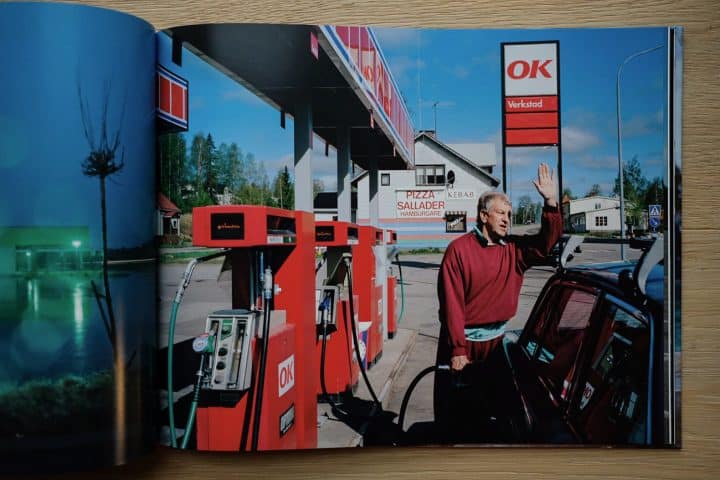
And with that, everyone should own at least one Lars Tunbjörk book! I haven’t seen all of his books, but attended his retrospective at Fotografiska, so it is hard for me to recommend one in particular. His retrospective is perhaps the most purchased and all encompassing as he did pass away in 2015.
I think the most concise would be L.A. Office coming off of shooting the post-bubble economy offices of Japan. But either way if you come across one in a used bookstore just get it…this one can be purchased from most book retailers, although the prices are going up, yet for under a 100 USD.
Jesse Freeman is a friend, photographer and movie buff. He has a great knowledge of photography books and classic cinema. He can also be relied upon for decent music recommendations.
You can see more of his work and passions at the following places:
https://www.instagram.com/jesselfreeman/
http://www.flickr.com/photos/imnothinginparticular/
Want to read Jesse’s other great reviews? Then click here to go to the archives.
JCH






Hello!
I’ve read JCH for a couple of years. It was a surprise to see a Swedish photo book being featured here. Especially Tunbjörk, since I’m still thinking about the large Lars Tunbjörk photo exhibition which was shown last year in Stockholm, where I live.
I’d like to comment on a few things.
First, prime minister Palme wasn’t killed “in front of his home”, but in the centre of the city. This can be confirmed with a quick fact check.
The welfare state didn’t become “dismantled that night in 86”. Everyone should strive to avoid such clichés and simplifications. The welfare state was already falling apart in 1986, for reasons completely unrelated to the murder of the prime minister. Mainly: the postwar economic boom which paid for the welfare state ended in the 1970s – in Sweden as in many other countries. Also: the Social democratic party had no ideas left, and had become something very different from the hard working idealists of the 1930s. Another explanation is that the welfare state had achieved more or less all of it goals in the 1960s; after that, there was nowhere to go.
I would also like to comment on Tunbjörk’s aesthetics. My view of him is different from yours. He’s constantly portraying people as ugly, stupid, tasteless, and inviting the urban art gallery crowd to look down on small town citizens. He was such a skilled and conscious photographer that this must have been his intentions. Most of all, he is portraying people as completely empty, completely influenced by their environment. They are soulless because their environment is soulless; there is not an atom of independence or opposition in them. This is the reason I can’t get him out of my head.
Can’t agree more with Håkan. Brilliant perspective.
Thank you for commenting! I went to that show as well~
Correct, “walking home” and “in front of home” are very different, you are right!
Symbolically speaking, it is a very plausible statement…of course it didn’t all collapse that night, but for the sake of a photo book review on a camera product website, a background context on a country’s 20th century economic situation needs to be simplified, and symbolic statements are useful in this. If I was reviewing Koudelka for example an extended paragraph on the Cold War history leading toward the Prague Spring would prove excessive in describing the context to say Exiles.
The aesthetic point I would say we are in agreement on, I wrote “portrayal of existential impotence that again to me should be viewed as a natural reaction to the times”, “images of a people who have made consumption their main goal in life”, and “It mostly consists of ordinary Swedish life, i.e supermarkets, small town streets, gas stations, landscapes, parties, etc. Shot during the economic recession of the early 1990s, the worst the country has faced since the 1930s” all are in accord with what you say. And that is why his images remain in our heads : ) Although I severely doubt he did it to invite the urban art crowd to look down on small town citizens since his work was much more varied as his Tokyo series, etc proves a universality ultimately concerned with an emptiness in relation to an environment (urban or rural). With that I have one more review of a Swedish photo book coming up in Sune Jonsson, would love to read your opinions on that~
Sune Jonsson? My only advice would be: go deep and be true to your own reactions, whatever you choose to write about. I’m glad that some Swedish photo books are being featured on the JCH web site! If you don’t know them already, perhaps you would also be intrested in looking at the books of Leif Sandberg and Cato Lein.
Regarding Tunbjörk, it’s good to hear that you were not offended. I wondered if I might have been to harsh. Even on a camera gear site, it would be fairly easy to write something like “the murder of prime minister Palme has become a symbol of the end of the welfare state, which was already in decline when he was killed.” That can be done in one sentence without misrepresenting what happened in a clichéd way; no one expects a photo book review to be a history lesson.
Tunbjörk uses exactly the same aesthetic wherever he goes – in the USA or in a Japanese office, so it’s not just about looking down on people in a city like Avesta or Borås. He always portrays people as nothing but products of their environment, and very carefully snaps his pictures in the moment where they look ridiculous, or when their eyes are hidden. They are placed outside of my circle of compassion, if that expression makes sense: I should look at them as if they were objects, mannequins, caricatures, examples -not citizens. I wouldn’t bother to comment about this if he wasn’t so damned good at it!
Ya, check it out and will definitely look for those in turn~ Sandberg appears to be associated with the last Swedish book review on J.H. Engstom who will also have an visual interview coming up! Lein seems really interesting! I like those photographers from Fotoskolan and the legacy around that, thanks!
Not at all. It was just strange really, I was at a house party there last November…and everyone stopped the party to have me watch the speech by Palme, “Why I am a Demcratic Socialist.” It was very important and the sentiment they related to me was the statement I made that you maintain is a cliché.
And again I think we are entirely in accord with his aesthetics~ I really enjoyed that show at Fotografika!
Fotografiska*
Ah yes, J. H. Engström, he’s good as well!
I wouldn’t say I enjoyed Tunbjörk, that’s stretching it a bit. Let’s just say I’m fascinated by his cold skill.
Best,
Håkan
I’ve seen his exhibition at Fotografiska in Stockholm – awesome work!
Right~!