Jesse’s Book Review – Photoworks by Kobo Abe
Kafka-esque is one of those over used terms that still many don’t quite understand. The description comes from a writer for example who’s oeuvre worked on the premise of a protagonist who awakes to find himself a bug. No explanations. Another novel sees a protagonist under arrest and never learns the charge before simply being taken out and stabbed to death mid sentence quite literally as the novel itself wasn’t even finished. And yet another novel sees a protagonist invited to a castle to do a job and is inexplicable denied and becomes obsessed with not only knowing why but getting inside. These all serve to define Kafka-esque.

Enter Kobo Abe, who among the literary avant-garde of the post war saw novels such as “The Woman in the Dunes” about a protagonist who on a work trip is led to stay with a woman in the bottom of the dune only to find that he can’t get out. He has to dig his way everyday with the woman or be suffocated. Another sees a protagonist looking for his pregnant wife in a hospital never to find her while there is another where a detective searches for a missing man only to find the man he was looking for was none other than himself.

The term Kafka-esque can be acquainted to Abe, (although one could certainly argue he evolved into his own, I will go into later) but then one must ask…what would Kafka’s photography look like? Kafka writing just after the turn of the century would have predated 35mm and the Leica perhaps the freedom from the tripod that would have made more sense to his work, but Abe did take photographs…and this is his lone photo book of his photography.
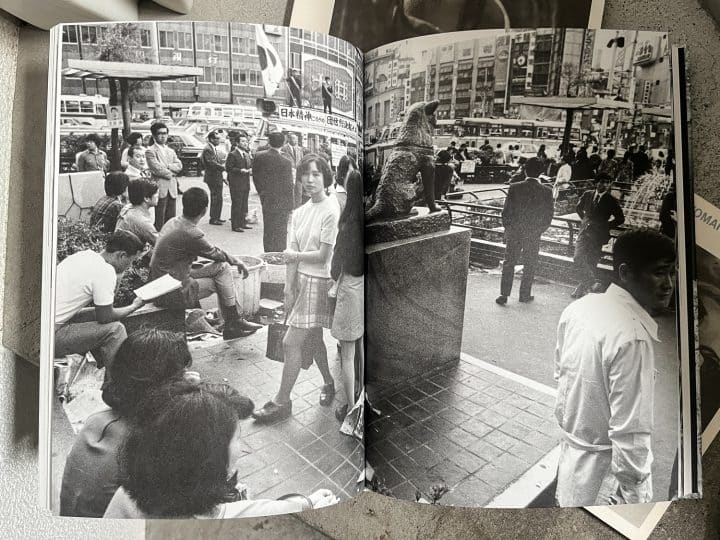
Shooting mostly in the 70s, it is immediately striking how aesthetically in the vein of Japanese photography his work fits. To a novice eye one could easily mistake him for a Moriyama or Fukase. Featuring only a Japanese afterword by the writer himself (I mean who better right), he makes an interesting point about Japanese photography in general citing at as a national common denominator…as everyone takes photographs. He saw it as nothing particularly special before going into the real question of what then can be done with the function of photography and quote (my rough translation):
“I am very interested in the space that changes over time, the process of transformation that is almost nonexistent when you are only looking for the result. And of course, I have the same interest in literature…”
Which kinda goes into my next point when looking at artistic mediums in that I am attracted to artists from other mediums who come into photography. In the past I reviewed the Steidl published photo book from Turkish Nobel Prize winning writer Orhan Pamuk and two film directors in Wim Winders and the late Abbas Kiarostami. I quoted in the review of the former writer a beautiful quote from Kobo’s fellow literary figure in Oe Kenzaburo who said something to the tune that intellectuals had a responsibility to go into other mediums to offer us fresh perspectives. Perhaps this is the slight difference where Abe simply goes into the medium without pretension…on its surface.
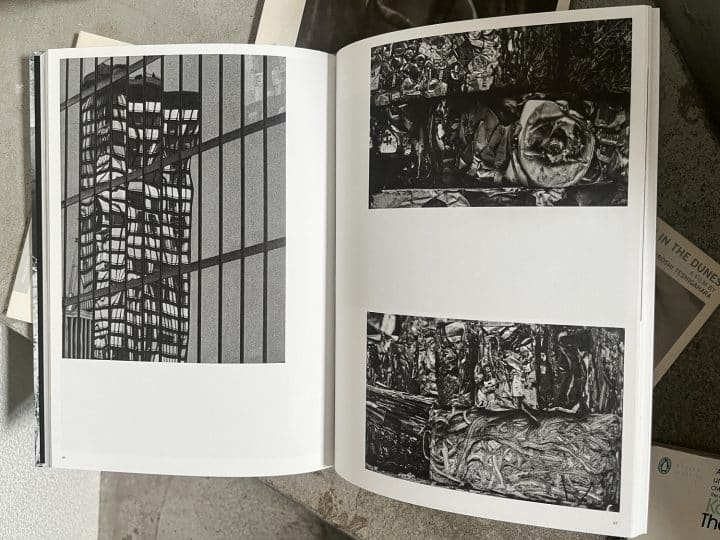
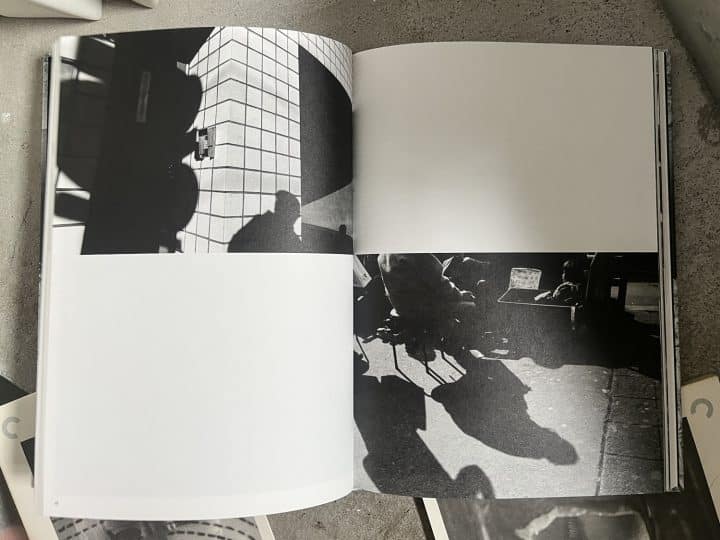
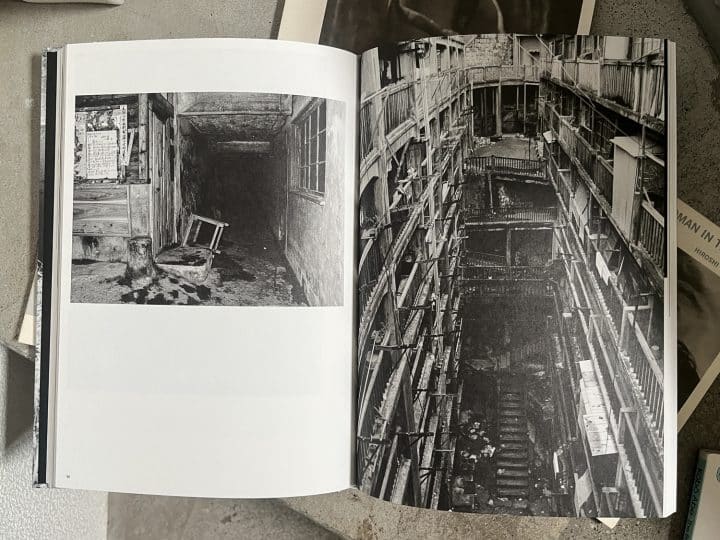
His subject matter and textures really hone into Moriyama while his motifs especially of the ravens not only echo, but predate Fukase. However, the overwhelming decrepitly serves as a through line through them all. But what Abe then does with his own Kafka-esque brand of surrealism developed from his established literary aesthetics is work in a lot of distortion into his compositions but more so it his symbolism…

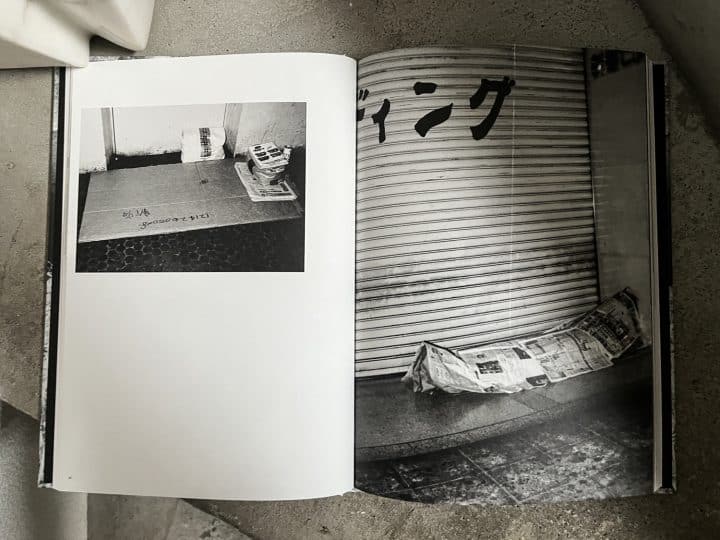
You can especially see it in preoccupations with boxes and general square shapes within his compositions. It was a later novel that he wrote, “Box Man,” that actually saw him injecting his own photography into the novel itself. Which made sense as the protagonist was a photographer. It was also around this time that his photography became more pronounced. For after decades of literary distillation to something more that could really be considered Abe-esque (or Kobo), where my good friend Curtis correctly asserted today… a hybrid world of fantasy, nightmares, and the mundane.
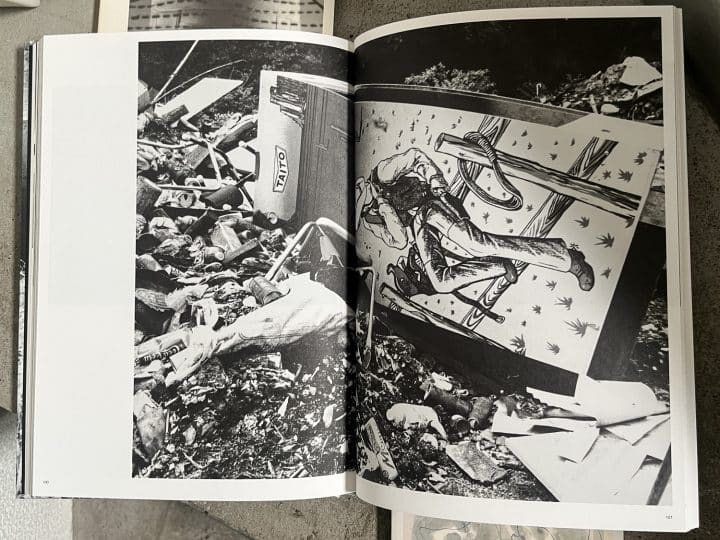
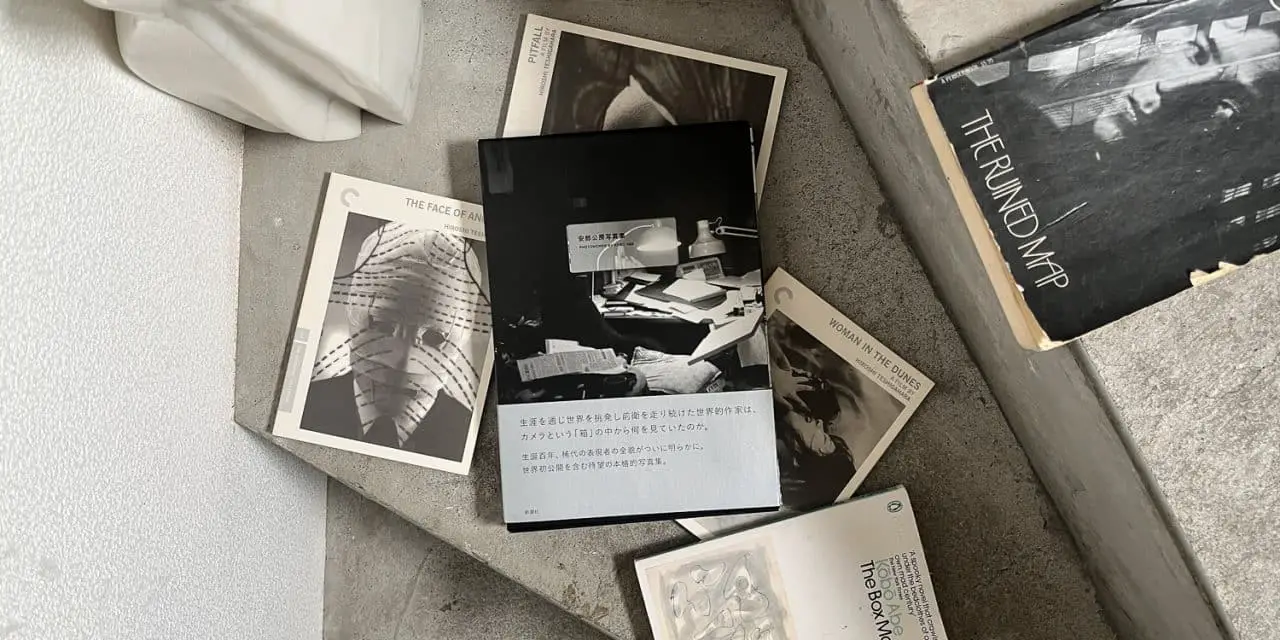
I do appreciate again how in the grain of Japanese photography it was with its are-bure-boke aesthetics. I think most would recognize Abe from his film collaborations with filmmaker/ikebana artist Hiroshi Teshigahara in the midst of the 1960s Japanese New Wave, although independent. They had a really beautiful run with the original screenplay Abe wrote in “Pitfall,” followed by what is considered the masterpiece in the aforementioned “Woman in the Dunes,” my personal favorite “Face of Another,” and finally the oft forgotten “Ruined Map.”
The one thing that always stood out to me about these films was how aesthetically polished they looked to his more raw contemporaries in say Nagisa Oshima and Shohei Imamura. Not knowing what to expect from the Abe book, I actually thought it would be more polished in the vein of his film collaboration with Teshigaraha, instead of the pure photography tradition that he perfectly falls into.
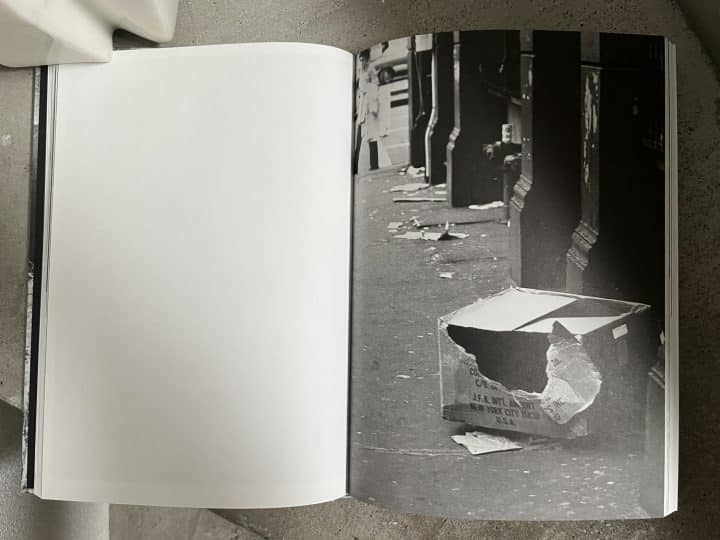
Published commemorating the 100th anniversary of his birth, the book is still readily available as a quick Google search will reveal (although mostly Japanese websites). There is no English in the book but you do get a lot in 136 pages in a B5 size. The price is a tad steep at 14,000 yen or about 90 USD.
As far as I know this is the only publication of his works although it is known he left over 10,000 negatives around the time of Box Man alone. So there certainly could be more. Either way his photography like his literature carries his own unique hybrid world of fantasy, nightmares, and the mundane…yet perfectly in the vein of Japanese photography of the time.
––––––––––––––––––––––––––––––––––––
For other book reviews click here.
-JF