In your bag 1789 – Ed Dougert
Ed Dougert shares with us his absolutely massive panoramic camera. This amazing machine takes some serious dedication. But he has just the project for it. Check it out.
My name is Ed Dougert, and my continuing project is documenting the anthracite coal region of northeast Pennsylvania, USA. Portions have been published in book and magazine form, along with multiple exhibitions.
The project was started in 1999 and has developed to where the concentration has been on various topics, such as abandoned mines and surface structures, or existing building architecture as a representation of the economic and social history of the area.
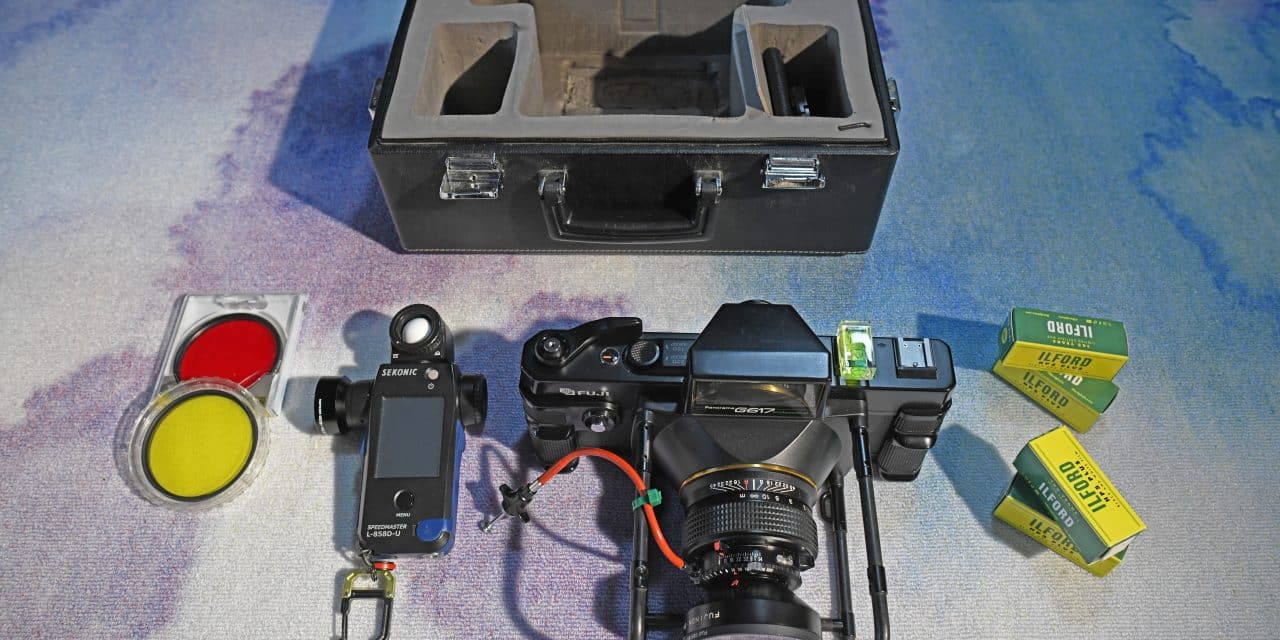
The current phase of documentation is to illustrate how 200 years of mining has transformed the landscape. For this, I use a Fuji G617 panoramic camera, which shoots 120 roll film. This format best shows the mountains of mine waste, the impact on vegetation, the disrupted drainage, and the extensive areas of “black desert.”
However, the panoramic is difficult to use in that there is much area to fill, and the photographer must be aware of creating good composition.
I keep the kit trim, as I often need to hike for long distances. The bag is mostly for transporting the camera to a parking location, where it mounts to an Arca Swiss ball head atop a Really Right Stuff tripod.
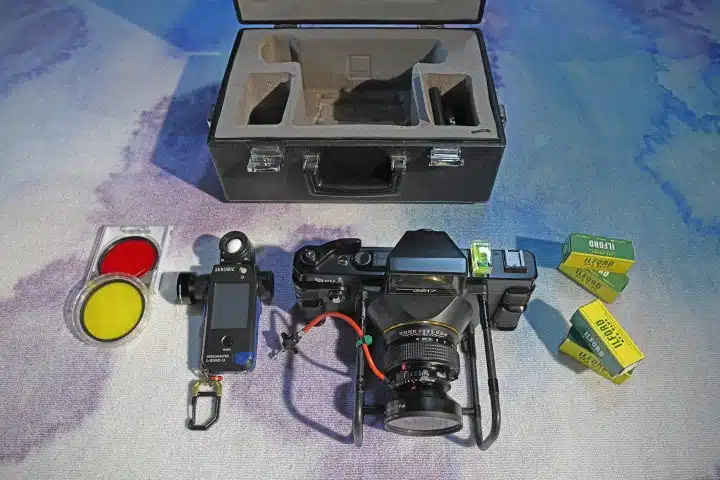
The kit includes: Fuji G617, Ilford HP5 120 film, Sekonic spotmeter, and cable release.
From the introduction to my last exhibition:
From an area of a bit more than 1,400 square miles in Northeastern Pennsylvania came the power that fueled the industrial age in America. Anthracite has been mined for more than two hundred years. In the Industrial Age, it broke the dependency on overseas coal and manufacturing, promoted the building of the first canals and railroads, and initiated the birth of large companies with great economic and political power.
At its peak in 1917, America’s first gigantic industry was mining 100 million tons each year, with over 180,000 people employed. The coal companies formed the United States’ first cartel and executed the first price fixing. Often, they had their own employee housing and stores. Some hired their own police force.
In the 1920s, the coal industry rapidly declined as oil, gas, and electricity were substituted in favor of coal. By 1938, production was down to less than half of its peak, and miners sought work elsewhere. After World War II, the average town lost between 25 and 50 percent of its people.
There are currently 180,000 acres of mine wasteland in Pennsylvania, holding over 2 billion tons of waste coal.
Much of the work is on my website: www.theblackland.com
Thanks for everything you folks do.
Ed D.
Thank you for sharing your amazing gear and project with us, Ed. Really wonderful work.
Please keep them coming folks, we need more submissions, so get your bag on Japancamerahunter.com
Send me a high resolution image of the bag. Optimum size is 1500px across. Please ensure there is a bag in the shot, unless you don’t use one. The more you can write about yourself the better, make it appealing and tell us a story. Snapshots of your gear with a camera phone and no words will not be featured.
Oh and don’t forget your contact details (twitter, flickr, tumbler et al). Send the bag shots here. Please understand that there is a long wait now as there is a backlog of submissions. Not all make the cut, so make sure yours is funny/interesting/quirky. And please make sure the shot is of good quality, as the ones that are not do not go up.
Cheers
Japancamerahunter